
Traders face heavy emotional stress when online platforms freeze account access. Discovering an unexpected block on a dashboard requires an immediate look at the backend data trail. If your investment portal stops processing regular withdrawals, verifying the real network records is vital. For individuals dealing with active locks inside Nexymus, tracking the ledger telemetry provides a clear framework for recovery.
The Compliance Profiling of Nexymus.com
Nexymus builds user trust by displaying highly advanced trading tools. Their public website markets rapid exposure to foreign exchange pairs, global stock indices, and digital tokens. This sophisticated web layout successfully mimics legitimate, fully licensed brokerage houses.
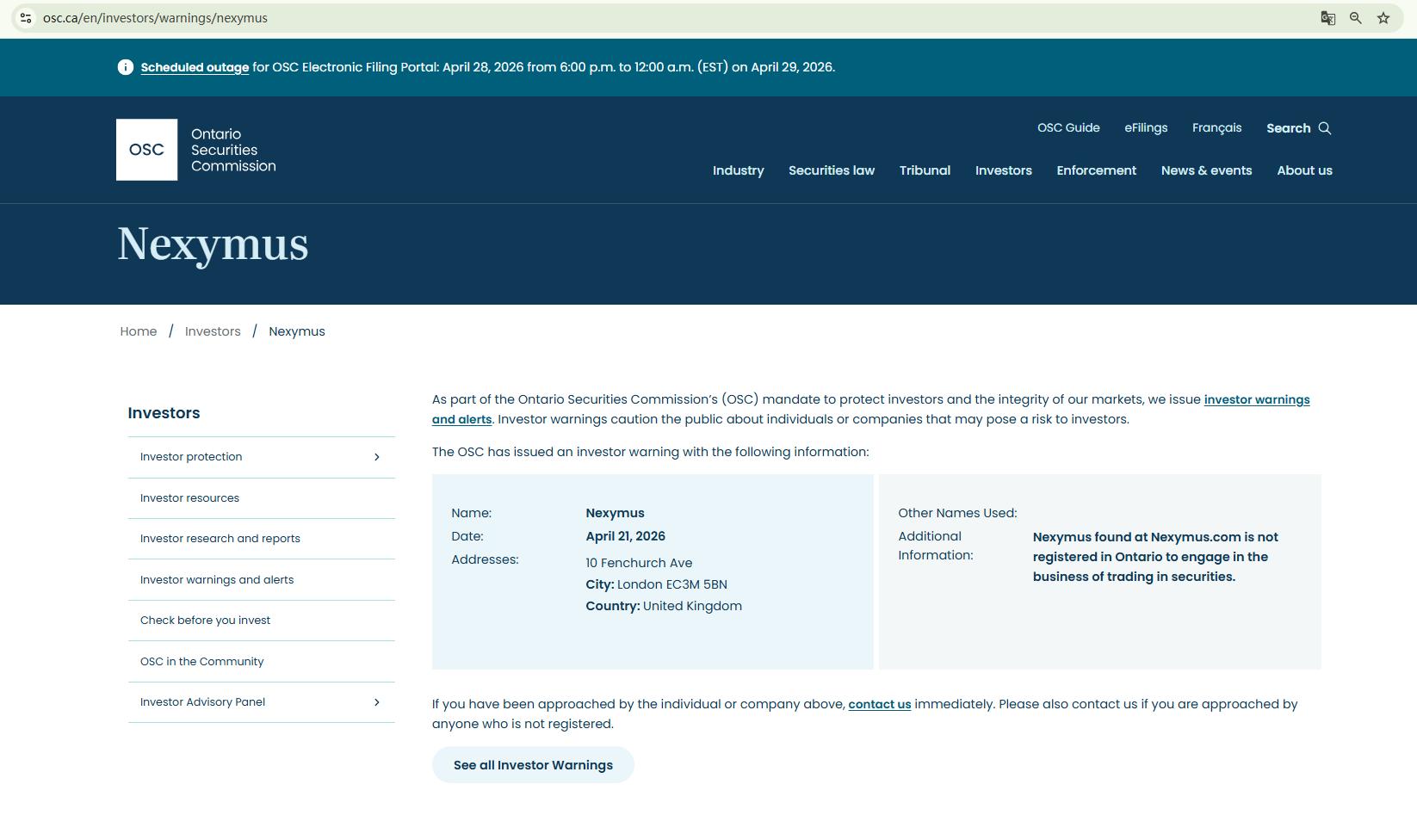
However, major financial watchdogs recently intervened to expose the platform’s actual regulatory standing. On April 21, 2026, the Ontario Securities Commission (OSC) and the Canadian Securities Administrators (CSA) issued a joint enforcement warning blacklisting the entity. Following that action, the New Brunswick Financial and Consumer Services Commission (FCNB) verified the alert on May 8, 2026. Official registration audits confirm that the group holds no legal license or corporate authority to offer investment securities in any market.
The network targets retail capital through its primary domain, nexymus.com. To create a false sense of security, corporate documents list a physical headquarters at 10 Fenchurch Ave, London, EC3M 5BN, United Kingdom. Recognizing that nexymus.com operates completely outside international regulatory oversight is a necessary step before launching a data-tracking case.
The Mechanics of Front End Manipulation
Most account holders discover the system restrictions during a standard withdrawal attempt. Up until that specific moment, the user dashboard shows consistent account balance growth. Please understand that this portfolio data is completely synthetic. The platform operators use automated software scripts to simulate daily returns, which encourages users to deposit extra margin capital.
When a participant requests an outbound transfer, the backend software automatically halts the payload. The interface usually displays a generic technical error, an unverified security audit hold, or an artificial tax flag. Shortly after, account managers reach out via messaging apps or email. These agents state that the platform cannot release the balance until the user pays an upfront administrative processing fee or an out of pocket clearance tax.
In reality, paying these additional fees will not restore your portal access. This obstacle script is a standard advance fee method used to secure final deposits before handlers sever communication entirely. If your goal is to find a reliable Crypto Asset Recovery Service, you must stop sending capital to these network nodes immediately.
Tracing Capital Velocity and Routing Paths
While customer desk agents stall user inquiries on nexymus.com, the true assets move rapidly through hidden automated scripts. Incoming crypto tokens do not sit idle in your initial deposit wallet. Instead, the network routes your capital to massive aggregation hubs within minutes of transaction confirmation.
Furthermore, the handlers deploy advanced multi-signature routing loops to obscure the transaction history. The system continuously splits large capital blocks into irregular, fractional amounts. This deliberate fragmentation dilutes your digital footprint across public ledger explorers, which directly stalls a standard Stolen USDT Investigation with centralized exchange compliance teams.
Overriding Dashboard Blocks via Ledger Audits
Fortunately, the transparent nature of blockchain networks provides an excellent path for independent recovery. Operators can manipulate a private web interface, but they cannot alter permanent entries on the public ledger.
Initiating a professional Blockchain Forensic Audit allows you to bypass the fake indicators on nexymus.com entirely. This precise tracking process isolates your unique transaction hashes from background ledger volume. Consequently, it maps out the exact route to the destination wallets where the scattered units reunite.
A Certified Recovery Specialist uses this transaction roadmap to pinpoint the final centralized settlement nodes. These target addresses are almost always tied directly to corporate deposit wallets at major digital currency exchanges. Identifying these exchange endpoints provides concrete, unalterable data proof. This documentation gives exchange risk teams a solid framework to freeze the destination accounts, preventing the handlers from completing a cash payout.
Traditional law enforcement bodies face massive caseload backlogs and strict territorial borders. Therefore, public agencies rarely have the tools to live-track automated contracts across multiple foreign regions. This operational gap is why utilizing an independent Crypto Asset Recovery Service like EthicalAsset Solutions establishes immediate momentum. A specialized firm like EthicalAsset Solutions organizes your transaction hashes, address telemetry, and wallet data into a verified case dossier.
If you want to recover stolen funds, avoiding online ads for instant, push-button recovery software shortcuts is highly advisable. Because blockchain transactions are final, a validated transfer requires deep forensic tracking and administrative pressure rather than simple tech shortcuts. Delivering a completed forensic file to an exchange compliance team provides a solid framework to protect your capital. For anyone focused on how to recover stolen funds, success depends completely on protecting your original transaction data hashes and mapping out the ledger telemetry.
Leave a Reply